
Summer Tree Care in Charlotte, Fort Mill, and Surrounding Areas
Summer in the Carolinas is hard on trees, and the damage isn’t always obvious until it’s too late. Whether you’re a homeowner managing a few trees in your yard or a property manager responsible for an entire community, what happens during the summer heat and storm season has a direct impact on how your trees look, grow, and last for years to come.
Beautiful Trees: What Makes This Region Home
Charlotte and the surrounding communities of York County aren’t just tree-friendly; they’re officially Tree City USA. The National Arbor Day Foundation has recognized Charlotte with that designation every year since 1980, and it shows.
What gives Charlotte its reputation as The City of Trees?
Mature ash trees, oaks, dogwoods, magnolias, maples, and pines line the streets, neighborhoods, and greenways. Charlotte’s Tree Management program plants an average of 800 trees per year, and helps maintain more than 200,000 trees. York County and its communities have passed many conservation ordinances to protect the canopy.
Keeping trees healthy through a Carolina summer takes dedication and some know-how, and we hope this guide helps you preserve your trees and the area’s lovely treeline.
Summer tree care guide
Newly Planted Trees: Water Deeply and Consistently
Rather than frequent shallow watering, aim for slow, deep watering that reaches the root zone. If there aren’t any drought restrictions, water to a depth of 18 to 24 inches.
A slow trickle from a hose at the base for 45 to 60 minutes, once or twice per week during dry stretches, is more effective than a quick sprinkler pass. Deep watering encourages roots to grow downward and builds the structural foundation trees need to thrive in our hot summers.
2. Maintain Mulch Around the Base of Young Trees
If trees aren’t established with a strong root system, keep a 3- to 4-inch layer of mulch extending to the drip line. Mulch helps reduce soil temperature and slow moisture evaporation from the root zone.
IMPORTANT TIP: Keep mulch a few inches away from the trunk to prevent rot. Don’t cover the root flare, where the trunk flares out at the base. Keeping the root flare visible is essential for tree health.
3. Pay Attention to Seasonal Pruning Guides
Routine maintenance pruning is best done in late winter or early spring when trees are dormant. If you notice deadwood, hazardous limbs, or growth that may cause problems before the proper pruning season, we offer complimentary tree risk assessments and estimates for properties in our service area.
We serve York County and the nearby Charlotte area and can assess whether a limb requires immediate tree trimming services or can be safely scheduled for seasonal tree pruning.
4. Considerations for Lakeside Trees
Homeowners on Lake Wylie and properties bordering retention ponds across York County face tree care challenges that standard residential landscapes don’t. Fluctuating water levels, prolonged soil saturation, and erosion pressure can cause even long-established trees to develop root rot, destabilized root systems, and structural problems over time, particularly species that aren’t adapted to periodic flooding.
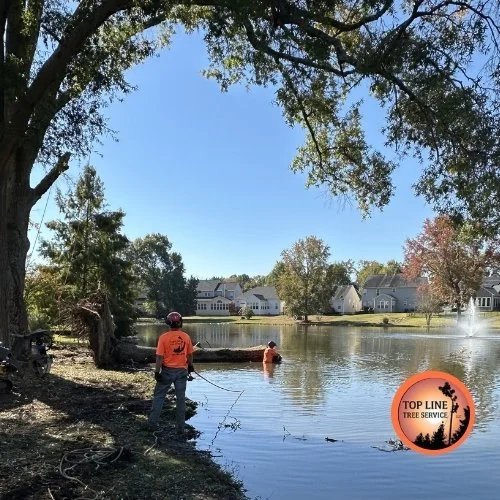

Shoreline trees stabilize banks and filter runoff, so removal decisions carry more weight here than in a typical yard. A structurally compromised tree leaning toward a dock, a common watercraft route, or neighboring property is a hazard that warrants prompt attention. If your property connects to Lake Wylie or a retention pond in the Fort Mill, Tega Cay, or Steele Creek area, schedule annual wellness checks and maintenance to prevent damage or loss of the tree.
5. Fertilizer Timing
If your trees could benefit from a nutrient boost, plan for a fall application when cooler temperatures allow the tree to respond more effectively. Applying fertilizer during summer can push new growth that the tree may not have the resources to support, increasing stress rather than easing it.
6. Watch for Pest Infestation
Beetles are among the most damaging threats to trees in the Charlotte region. Several species burrow beneath the bark and feed on the tissues that move water and nutrients through the tree.
Emerald ash borer (EAB) tree damage is a particular concern; infested trees decline rapidly and can be lost within just a few years of initial infection. Look for thinning canopy, D-shaped exit holes in the bark, or increased woodpecker activity. If you suspect beetle activity on your property in Fort Mill, Rock Hill, or the surrounding Charlotte area, contact a certified arborist for prompt evaluation.
7. Early Signs of Drought Damage
Knowing the early warning signs of drought stress can mean the difference between helping a tree recover and losing a tree altogether.
Watch for premature leaf drop, scorched or washed-out foliage along the margins, or sudden, widespread canopy decline during a hot stretch. Native species such as willow oaks and red maples handle heat reasonably well once established, but ornamentals and younger transplants are far more vulnerable. Supplemental deep watering can help, but for a complete checklist, reference the tree care during drought season guide.
8. Storm Damage
The combination of gusty winds and full canopy weight creates real hazards for trees on residential and commercial properties. After a heavy storm, walk your property and look for hanging limbs, cracks at major branch unions, root heaving at the base of trees, or trunks that have shifted position. These are not issues to monitor over time; they require prompt evaluation.
Storm-damaged trees are also more susceptible to secondary threats, including entry wounds for fungal disease and wood-boring insects. Address storm damage quickly to limit exposure and long-term damage.
9. Fungus and Mildew
Powdery mildew, leaf spot diseases, and Cercospora are common this time of year and can spread quickly. Trees should be pruned according to species guidelines; if the foliage becomes too dense, it will prevent air circulation and sunlight from reaching the inner sections, leaving the tree susceptible to fungal disease.
Certain species are particularly prone to powdery mildew and sooty mold during humid summers:
Crape myrtles
Dogwoods
Oak trees
If you notice unusual spotting, a white, powdery coating on leaves, or early defoliation, call an expert.
10. Schedule Summer Tree Inspections
Heat, pest pressure, and storm activity all take a toll on trees through the summer. Scheduling a seasonal inspection can identify early signs of structural weakness, disease, or pest activity before small problems become costly ones and ruin your beautiful trees.
Top Line Tree Service serves homeowners, HOA communities, and commercial property managers throughout Fort Mill, Tega Cay, Rock Hill, and the greater Charlotte metro. Click here to schedule a tree service or consultation and give your trees the best possible care this summer.